


FlyAce: Crash Game by Pokerist
4.513.00 Reviews
App Specs
- Version
- 75.8.0
- Updated On
- License
- Free
- Downloads
- 10,000+
- Developer
- KamaGames
- Categories
- Arcade
- Platform
- Android
Screenshots



 Analysis by AppCompare
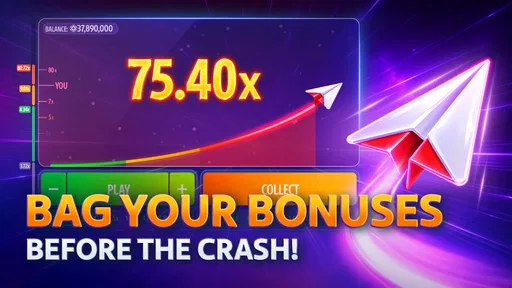
I started FlyAce expecting a quick arcade distraction, and its central idea became clear almost immediately: choose a bet, watch a multiplier rise with the flight, and decide whether to collect before the round crashes. That first action is simple, but it creates a surprisingly sharp decision. Waiting can increase the possible return, while cashing out earlier protects what is already on the table. The game turns a few seconds of anticipation into its main source of tension.
This is a free crash-style casino game from KamaGames, listed in the arcade category for Android. It is aimed at Teen users, runs on Android 6.0 and later, and the current version is 75.8.0. The basic download does not require an upfront purchase, although optional in-app items range from $0.99 to $999.99. That last detail matters: I would treat it as a game of controlled entertainment rather than a harmless toy, especially if you are tempted to chase a disappointing round.
How the FlyAce loop feels in actual play
In actual play, I find the key skill is deciding what a satisfying exit looks like before the multiplier starts climbing, then resisting the urge to revise that plan mid-flight. That makes each round easier to judge on its own rather than by the next one’s promise. It also points to the practical question of how to fit this quick, attention-hungry loop into a short session without letting it run on autopilot.
The first action is quick, but the decision is not
The opening move is not buried under a long tutorial or a complicated arcade control scheme. You enter a stake, begin the flight, and watch the rising value. The interface is built around one question: when is enough enough? In practice, I found that the most important part of each round happened before pressing the start button. Deciding a small, repeatable amount in advance made the game feel more deliberate; choosing impulsively made every result feel personal.
That distinction is useful for new players. The game’s appeal does not come from steering the aircraft or mastering a difficult control pattern. It comes from reading your own reaction to uncertainty. If you enjoy timing games where a single tap can preserve a gain or turn waiting into a loss, the opening seconds are engaging. If you prefer direct skill, visible level progression, or controls that let practice improve your performance, this may feel thin compared with a conventional arcade game.
I also recommend treating the bet as a limit for the round, not as a challenge to recover whatever happened previously. That sounds obvious, but the rapid restart makes it easy to move from one decision to another without a pause. A practical routine is to choose the amount before the animation begins, decide what kind of exit you are comfortable with, and then accept the result. This keeps the first action from becoming an emotional reaction to the last one.
The feedback rhythm keeps attention locked on the screen
Once the flight begins, the feedback is immediate. The rising multiplier gives you a visible sense of progress, while the possibility of a sudden crash prevents the progress from feeling secure. I liked that the game communicates its tension visually rather than asking me to interpret a complicated board. You see the opportunity grow, you feel the pressure to act, and the round ends abruptly enough to make the next attempt tempting.
Worth Reading Before You Choose

Baby Panda World Brings Quick Play to Modern Phones, but Its Game Library Feels Busy

ESPN’s Live Game View Makes Following Close Games Easier

QuizzLand Review: A Good Fit for Short Trivia Breaks, Not Every Player

Basketball Stars: Multiplayer Is Fast, but Can It Recover When Matches Go Wrong?

WEBTOON Turns Phone Updates Into a Better Reading Routine

Link to Windows Runs on Shared Habits, Not Social Feeds
The rhythm is especially effective in short sessions. I could play one round while waiting for something, stop after a few decisions, and understand exactly where the time went. There is no need to memorize a map, build a deck, or learn a character’s abilities. The feedback arrives in a compact cycle: movement, rising value, decision, outcome. That clarity is the strongest arcade quality here.
It is also the main weakness. Because each round is so easy to understand, the game can encourage automatic repetition. A traditional arcade title often gives you a reason to improve a route, timing window, or score technique. Here, the emotional feedback can become the content. A near miss feels meaningful even when it does not teach you a reliable skill. I would therefore avoid interpreting a long run or a close crash as evidence that the next round is more favorable.
One useful habit is to mute the urge to react instantly to the visual rise. Before playing, decide whether your goal is a cautious exit or a higher-risk attempt, and keep that choice stable for a short session. This does not change the game’s outcome, but it does make your decisions easier to evaluate. Without that discipline, the feedback rhythm can blur together and turn a planned break into a much longer sitting.
The reward is satisfying because it arrives at the exact moment of risk
The game’s reward is tied directly to the cash-out decision. When I collect before the crash, the result feels earned because I acted while the value was still increasing. The reward is not separated from the action by a long results screen or a progression tree. It appears as the immediate consequence of choosing to stop. That connection gives even a small success a clear shape: I saw the risk, made the call, and protected the outcome.
There is a trade-off, though. A cautious cash-out can feel disappointing when the flight continues after I leave. That is where the game tests patience more than reflexes. If you judge every safe result against the maximum you might have reached, even a successful round can feel like failure. I found it healthier to judge the decision by whether it matched the limit I set beforehand, not by what happened after I exited.
This is also where expectations about the word “win” need care. FlyAce presents a casino-style reward loop, not a dependable way to make money. The presence of optional purchases makes it particularly important to separate entertainment spending from everyday finances. I would never use money needed for bills, transport, food, or another obligation. If losing the chosen amount would make you immediately want to reload, the game is not a good fit for that moment.
For a more controlled use case, I can imagine someone opening it during a short break with a fixed entertainment limit and a planned stopping point. The game suits that scenario because a round resolves quickly and the decision is easy to understand. It is less suitable as background entertainment while multitasking, because the most important moment can pass while your attention is elsewhere. The apparent simplicity does not remove the need to watch each round.
The reset is fast, and that is both the convenience and the trap
After a crash or a cash-out, the game makes it natural to begin again. The reset is part of the appeal: there is little friction between the result and the next attempt. I appreciated that when I wanted a brief burst of play, but I also noticed how quickly the previous round’s emotion could carry into the next one. A disappointing crash invites recovery. A successful cash-out invites a bolder follow-up. Both reactions can push the next bet away from the plan.
My most useful approach was to insert a physical pause between sessions rather than relying on the game to provide one. Put the phone down after a predefined number of rounds, check whether you are still enjoying the decisions, and only then decide whether to continue. This is more practical than promising yourself that you will stop after “one more” because the reset is designed to make another round feel effortless.
The reset also changes how I compare this game with ordinary arcade alternatives. In a score-chasing platformer or endless runner, restarting usually gives you another chance to improve through practice. In FlyAce, restarting mainly gives you another independent decision under uncertainty. That makes it better for players who enjoy suspense and worse for players looking for a clear mastery curve. If you want unlockable abilities, increasingly demanding stages, or a result that mainly reflects learned technique, another arcade game will probably offer more depth.
On the other hand, FlyAce is more approachable than many traditional arcade games. You do not need fast thumbs, a controller, or a large uninterrupted block of time. Someone who finds complex action games tiring may understand the basic loop immediately. The cost of that accessibility is a narrower range of meaningful strategies. The game is easy to enter, but the long-term interest depends heavily on whether you enjoy repeating the same risk-and-exit decision.
What the current package tells me about practical use
The Android version supports devices running Android 6.0 or newer, so it is not restricted to recent phones. That makes it a plausible option for someone using an older compatible device, although the experience will still depend on the handset and its general condition. The current release is 75.8.0, which is the version I would check before troubleshooting an unexpected issue or comparing the experience across devices.
The game has an average rating of 4.5 from around 160 ratings and has passed 10 thousand installs. Those figures suggest that it has found an audience, but I would not treat them as a substitute for deciding whether the crash format suits you. A strong rating can reflect how enjoyable the loop is for fans of quick casino-style rounds, while saying little about whether you personally want a game built around repeated risk decisions.
The Teen age guidance is worth taking seriously. Even without complex controls, the combination of betting language, fast outcomes, and optional purchases can be more intense than a normal casual arcade title. I would be cautious about handing it to younger players or letting someone use it without understanding the purchase side. The free entry point is convenient, but it should not be confused with a completely cost-free experience.
Because the available purchase range stretches from small amounts to very large individual items, I would review the device’s purchase protections before playing regularly. That is a practical step, not a criticism of the core loop. It reduces the chance that a quick tap made during a tense round becomes an unwanted charge. Players who want a completely fixed-cost game should choose an arcade title without optional spending instead.
Small decisions that make the loop easier to manage
My first concrete tip is to use a session budget rather than a round budget alone. A round limit tells you what you are willing to risk once; a session limit tells you when the entire activity ends. The second is to separate “testing the game” from “trying to recover.” If you are learning how the interface feels, keep the stakes minimal and focus on whether the timing and presentation are comfortable. Recovery changes the purpose of play and makes clear judgment harder.
A third useful distinction is between a target exit and a maximum fantasy. The target is the point at which you are satisfied and willing to stop. The fantasy is the highest value you imagine reaching if you wait longer. Keeping those separate prevents the result after a cash-out from rewriting your view of a sensible decision. This is one of the few ways to get more control from a game whose central event is intentionally uncertain.
I would also avoid playing when tired, distracted, or irritated. The rounds are short enough to feel harmless, but those conditions make the reset especially persuasive. A player who is focused can decide, observe, and stop. A distracted player may begin treating the game as an automatic tap cycle. That difference has more impact on the experience than any small interface preference.
Finally, decide what success means before opening the app. If success means enjoying a few tense minutes within a fixed limit, FlyAce can deliver that neatly. If success means building a dependable high score through practice, completing content, or improving a measurable arcade skill, the game is likely to disappoint. Defining that expectation is the best way to avoid asking the loop to provide something it was not designed to provide.
Who will enjoy it, and who should skip it
I would recommend it to adults and older teens who like compact, suspense-driven rounds and do not need a conventional arcade progression system. It works well for someone who enjoys making a stop-or-continue decision, wants a game that can be understood quickly, and is comfortable treating optional purchases as something to avoid or tightly control. The strongest audience is not necessarily serious gamblers; it is people who enjoy the psychology of timing and can keep entertainment separate from financial goals.
I would skip it if you are looking for a skill-first arcade game, a story, cooperative play, or a deep sense of advancement. I would also skip it if losses tend to make you increase your next attempt, or if the possibility of in-app spending makes you uncomfortable. A fixed-price arcade game, a score-based reflex title, or a puzzle with visible progression would be a better choice in those situations.
Compared with a typical endless runner, FlyAce is less demanding physically but more demanding emotionally. Compared with a standard casino game, its presentation is more focused and arcade-like, with the flight and multiplier creating a compact visual hook. Compared with a free-to-play action game, it has fewer systems to learn and fewer ways to express personal skill. Those comparisons explain its appeal clearly: the game removes almost everything except the decision to enter and leave a rising opportunity.
My verdict on the action, feedback, reward, and reset
After spending time with FlyAce, I see a deliberately narrow game that understands its own hook. The first action is accessible, the feedback arrives at the right speed, the reward is attached to a meaningful choice, and the reset is nearly immediate. That sequence is why another session begins: the last outcome leaves just enough unfinished emotion to make one more decision feel attractive.
Its limitation is equally clear. The loop does not develop into a broad arcade experience; it repeats the same central tension. That can be satisfying in short bursts, but it can also become monotonous or encourage chasing if you play without boundaries. The free price makes trying it easy, while the Teen rating and optional purchases mean it deserves more caution than its simple controls might suggest.
My final opinion is positive but conditional. I would keep it installed for brief, intentional sessions when I wanted a quick crash-game experience, not as my main arcade game and not as a way to pursue reliable returns. The best way to enjoy FlyAce is to control the session before the session starts. If that approach sounds natural to you, the clean risk-and-cash-out rhythm is worth trying. If you want mastery, progression, or a firm barrier against spending, choose a different kind of arcade game instead.
Pros
- Simple controls make it easy for beginners to start playing.
- Quick rounds fit short gaming sessions.
- Clean interface keeps the gameplay easy to follow.
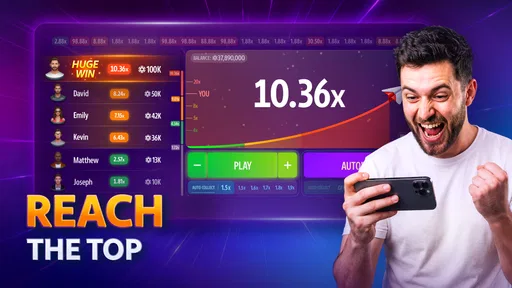
- Live multiplayer format adds excitement to each round.
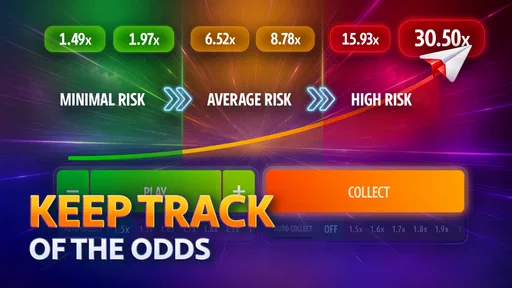
- Betting options can be adjusted to suit different play styles.
Cons
- Gameplay can become repetitive after extended sessions.
- Results depend heavily on luck rather than player skill.
- In-game purchases may encourage additional spending.
- Losses can accumulate quickly during consecutive rounds.
- Availability and features may vary by region or device.
FAQs for FlyAce: Crash Game by Pokerist
What is FlyAce: Crash Game by Pokerist?
FlyAce: Crash Game by Pokerist is a fast-paced multiplier game based on the popular crash-game format. You place a virtual bet before the aircraft takes off, then decide when to cash out while the multiplier rises. The round can end unexpectedly, so timing and risk management are central. It is designed for short sessions and quick decisions rather than traditional poker gameplay.
How do you play FlyAce and win a round?
To play, choose your wager before a round begins and watch the plane as the multiplier increases. You must cash out before the flight crashes; waiting longer may produce a larger payout, but you can also lose the stake if the crash happens first. There is no guaranteed strategy, and every round involves risk, so users should treat outcomes as unpredictable rather than skill-based profits.
Is FlyAce: Crash Game free to download and play?
FlyAce: Crash Game by Pokerist can generally be downloaded free of charge, although availability and included features may vary between Android and iOS. The game may use virtual chips, in-app purchases, advertisements, or other monetization options. Before installing, check the store listing for current pricing details, supported devices, age rating, and whether purchases can be protected through your device settings.
Does FlyAce use real money or virtual currency?
The experience is typically built around in-game or virtual currency, but the exact payment model can depend on the version, region, and platform. Players should carefully review the official app-store description and the game’s purchase screens before spending anything. Virtual chips should not be considered guaranteed cash value, and users should avoid confusing entertainment features with a reliable way to earn money.
Is FlyAce: Crash Game suitable for everyone?
FlyAce is intended for adults or users who meet the applicable age requirement in their country, because its betting-style mechanics can encourage repeated play and spending. It may not be appropriate for children or anyone affected by gambling-related problems. We recommend enabling purchase restrictions, setting a personal spending limit, and checking local regulations, privacy information, and responsible-play tools before downloading.


